October 2, 2026 · Buying in Naples
Key Takeaways
- Naples flood zones follow FEMA flood maps, and Collier County plus the City of Naples adopted new maps effective February 8, 2024.
- Zone AE and Zone VE are Special Flood Hazard Areas where flood insurance is mandatory for a federally backed mortgage.
- Under FEMA's Risk Rating 2.0, each home is priced individually, so elevation, foundation, and distance to water matter more than the zone letter alone.
- Collier County and the City of Naples both hold Community Rating System Class 5 ratings, worth up to a 25 percent discount on NFIP premiums in flood zones.
- A current elevation certificate is one of the most valuable documents in a Naples waterfront purchase. It can save you thousands a year.
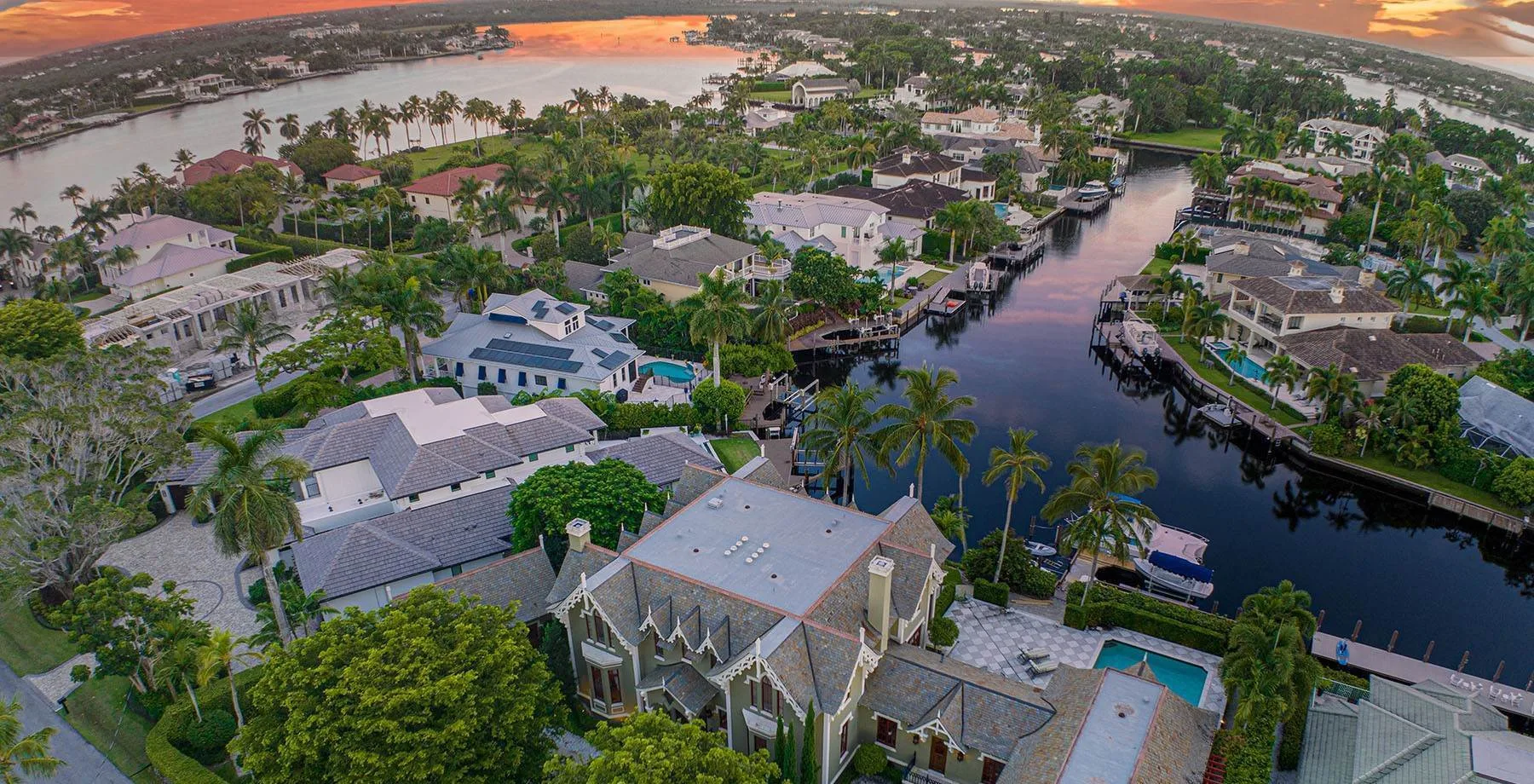
Naples flood zones follow FEMA's flood insurance rate maps, and for anyone buying waterfront property they are one of the first things to understand. Most canal and beachfront homes in Naples sit in a Special Flood Hazard Area, which means flood insurance is required for a federally backed mortgage, and the annual premium can shape your total cost of ownership. Here is how the zones work, what they cost under the NFIP's new pricing, and what to check before you make an offer.
What Are Naples Flood Zones?
FEMA classifies flood risk on Flood Insurance Rate Maps, or FIRMs. In Naples, the three letters you will see most are AE, VE, and X, and each one changes the conversation around buying and insuring a home.
Zone AE is the Special Flood Hazard Area subject to the 1 percent annual chance flood, the event FEMA calls the "100-year flood." These zones have mapped base flood elevations, flood insurance is mandatory for federally backed loans, and new construction must be elevated to current code. In Collier County, Zone AE covers broad coastal lowlands and the land along canals, bays, and rivers, from Aqualane Shores and The Moorings inland to neighborhoods like Pine Ridge.
Zone VE is the coastal high-hazard area. It carries the same 1 percent flood risk plus storm-driven wave action, which is the highest risk designation you will find. Beachfront and near-shore properties in Park Shore, Pelican Bay, Olde Naples, and the barrier communities are commonly in VE. Construction rules are stricter here: homes are typically elevated on pilings with breakaway walls below the lowest finished floor, so storm surge can pass under the house instead of through it.
Zone X means moderate or minimal risk outside the Special Flood Hazard Area. Flood insurance is not federally required, but it is still recommended, because heavy rain and rising groundwater flood homes outside mapped zones too.
One more thing matters: the maps are not static. Collier County and the City of Naples adopted a new digital flood map, the DFIRM, effective February 8, 2024, after a multi-year study with FEMA. Boundaries shifted, and some properties changed zones. That is why I never rely on memory or an old listing when a client asks about flood considerations for a Naples relocation. I pull the current determination for the exact address, then check it against the FEMA Flood Map Service Center and the Collier County floodplain management office.
How Naples Flood Zones Affect Your Home Search
If a property is in Zone AE or VE and you finance it through Fannie Mae, Freddie Mac, FHA, or VA, flood insurance is mandatory at closing and stays mandatory for the life of the loan. This is not negotiable. The lender requires it because the asset securing the loan sits in a known flood hazard area.
Even cash buyers should carry it. Standard homeowners insurance does not cover flood damage, and one storm can produce a claim measured in six figures. In my experience, the buyers who skip flood insurance on a waterfront home almost never skip it a second time.
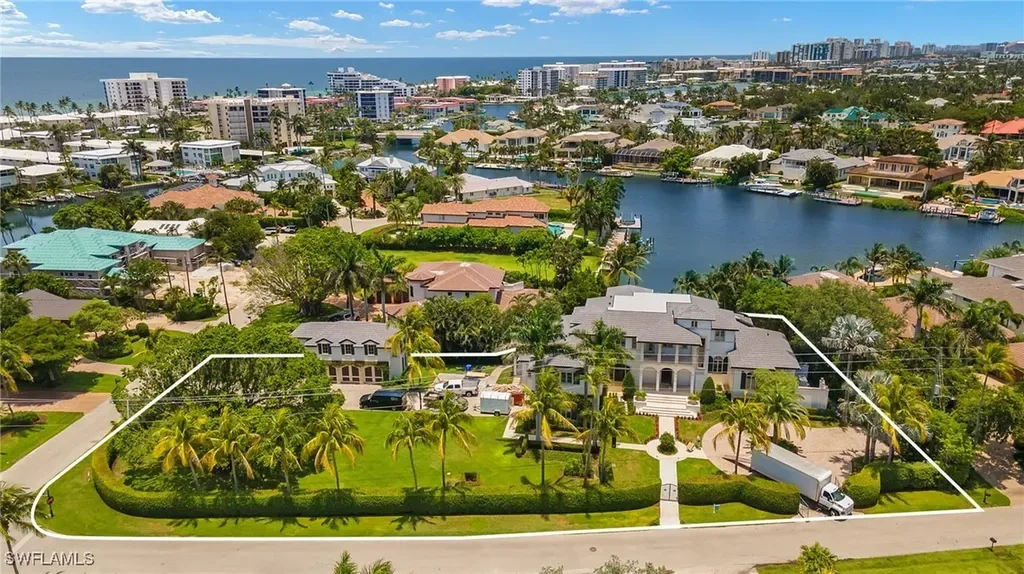
The way the zone plays out depends heavily on the neighborhood. In Aqualane Shores, canal-front homes are largely in AE, and the elevation of the finished floor relative to the base flood elevation is the single biggest factor in the premium. In Park Shore and Pelican Bay, beachfront condominiums and estates sit in VE, where wave action drives both the code requirements and the rate. Olde Naples blocks near the pier mixed with waterfront estates, and The Moorings wraps Moorings Bay with a range of older and newer construction. Same region, very different flood profiles. That is why a neighborhood that looks similar online can cost very differently to insure.
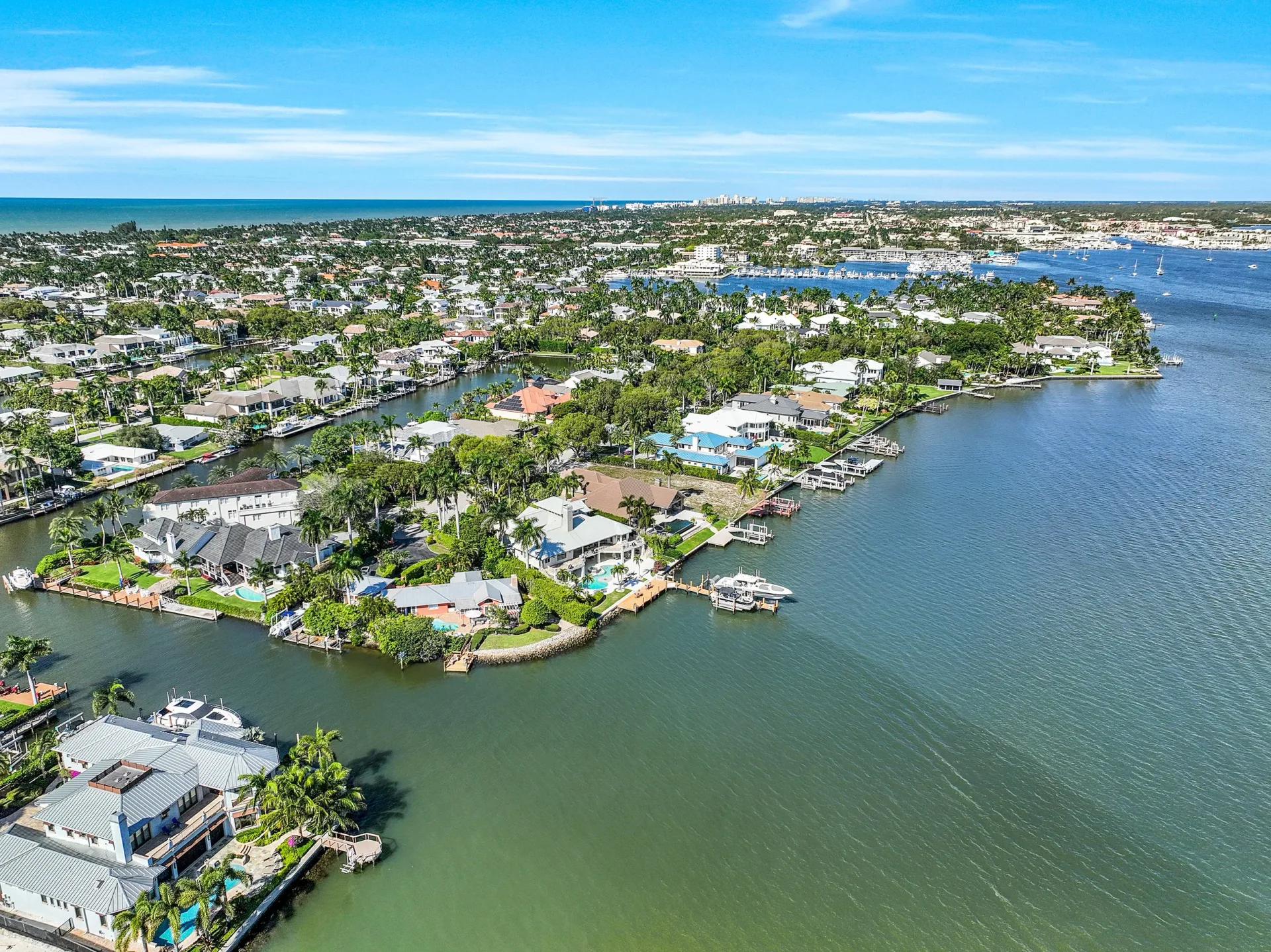
The most useful document in a Naples waterfront transaction is the elevation certificate. It records the finished-floor elevation, the base flood elevation for the site, and the lowest structural point of the home. A house built one foot above base flood elevation can be dramatically cheaper to insure than a neighbor sitting below it, because the flood zone arranges the risk and the elevation arranges the premium. I ask for the elevation certificate before we write an offer, not after.
What Flood Insurance Costs in Naples
FEMA completely changed how the National Flood Insurance Program prices policies. Under Risk Rating 2.0, new policies were priced individually starting October 1, 2021, renewals followed from April 1, 2022, and the system was fully in place by April 1, 2023.
The old system used the zone letter and base flood elevation to set the rate. Risk Rating 2.0 prices each home on its own: replacement cost value, how often that stretch of coast floods, the flood type (coastal versus riverine), distance to the water, the building's elevation relative to the risk, the foundation type, and prior claims. Two homes in the same AE zone can have very different premiums today. Increases are phased in gradually, capped at 18 percent per year for most primary residences under FEMA's glide path, and some premiums actually went down.
Florida holds more NFIP policies than any other state, roughly 1.7 million, which should tell you how central flood coverage is to owning here. It also helps that both unincorporated Collier County and the City of Naples participate in the NFIP Community Rating System at Class 5, which earns residents up to a 25 percent discount on NFIP premiums for homes in Special Flood Hazard Areas. That is real money every year, and it is one more reason to work with an agent who knows the local programs. You can get a starting picture of costs on the official FloodSmart consumer site, and the City of Naples flood zone maps page links the local flood requirements and resources.
Private carriers also write flood coverage outside the NFIP, and they can be competitive on elevated, well-built homes. I ask an insurance professional to quote both the NFIP and the private market before advising a client, because the difference on a raised home can be significant.
Elevation and Construction: What a Builder Checks
The Florida Building Code requires new residential construction in Special Flood Hazard Areas to elevate the lowest occupied floor at least one foot above base flood elevation, with stricter standards in coastal high-hazard zones. The City of Naples adds its own floodplain rules, including a minimum finished-floor elevation above the crown of the road in flood-prone areas. That is why modern waterfront homes sit so high: the code, the lender, and the insurer all reward elevation.
When I walk a property as a licensed Certified Building Contractor, I am looking for the built evidence that supports a sane insurance bill: the finished floor relative to the flood level, impact-rated windows and doors, roof age and fastening, raised electrical panels and HVAC equipment, flood vents in enclosed areas below the floor, and seawall condition along canals where waterfront is at stake. An older home that was never elevated can carry a large premium and expensive retrofit history. I cover the full checklist in my article on understanding construction quality in Naples luxury homes, and it is the same lens I apply through the buying process in my buyer's guide.
Hurricane Season in Naples: What the History Tells Buyers
The official Atlantic hurricane season runs from June 1 through November 30, and anyone closing on a Naples property should plan for it. Hurricane Ian made that point emphatically when it made landfall in Southwest Florida on September 28, 2022, as a slow-moving Category 4 storm. Storm surge flooded canals and low-lying streets in Olde Naples, damaged the Naples Pier, and caused roughly $2.2 billion in property damage in Collier County, with about 3,515 buildings sustaining major damage. Water, not wind, did most of that damage, and it is exactly why flood zone, elevation, and insurance matter as much as the finishes when you buy.
A practical post-storm checklist for this fall: confirm the current flood zone on the new maps, request the elevation certificate, ask for the property's prior flood loss history, check whether enclosed areas below the floor are proper flood vents rather than walled-off storage, and get an insurance quote before the offer, not after. Nearly every painful surprise I have seen in waterfront transactions traces back to one of these five items.
The good news is that the market has adapted. Elevated new construction, impact glass, and reinforced roofs are now standard in the neighborhoods that matter most, and buyers who do the homework are rewarded with lower premiums and better storm resilience. If you are weighing properties across Park Shore and Pelican Bay, or anywhere else along the coast, I can help you compare the full cost picture before you commit.
The Bottom Line
A flood zone is not a reason to avoid Naples waterfront. It is a reason to evaluate deliberately. Buyers who understand the zone, the elevation, the premium, and the construction enter negotiations with real information, and that information usually translates into a smarter offer and a better long-term purchase. That is the kind of advice I have given for nearly 40 years, and it has not changed: read the property from the foundation up before you commit a dollar to it.
Naples Flood Zones and Flood Insurance: FAQ
Do I have to buy flood insurance when buying a home in Naples?
If the home is in a Special Flood Hazard Area, Zone AE or Zone VE, and you use a federally backed mortgage, yes. The lender requires flood insurance at closing and for the life of the loan. Cash buyers are not federally required to carry it, but most do, because flood damage is not covered by homeowners insurance and one storm can produce a claim measured in six figures.
How do I find out what flood zone a Naples property is in?
Look up the address on the FEMA Flood Map Service Center, check the Collier County floodplain management resources, or ask me to pull the flood determination and elevation certificate during due diligence. The current county and city maps took effect February 8, 2024, so make sure you are reading the current mapping, not an older version.
What is the difference between Zone AE and Zone VE in Naples?
Zone AE is the Special Flood Hazard Area subject to the 1 percent annual chance flood, with published base flood elevations and rising floodwater risk. Zone VE is the coastal high-hazard area where wave action adds force to that same flood risk, so it has the highest risk designation and the strictest construction standards, typically pilings and breakaway walls. Beachfront neighborhoods like Park Shore, Pelican Bay, and Olde Naples are commonly in VE, while canal and inland lowland neighborhoods like Aqualane Shores and The Moorings are largely in AE.
Will my flood insurance premium be higher than it used to be?
Not necessarily. Risk Rating 2.0 prices each home individually using replacement cost, flood frequency, flood type, distance to water, elevation, foundation, and prior claims. Some premiums went down and others rose, with increases phased in at up to 18 percent per year for most primary residences. The only way to know the number for a specific property is to price the policy with an insurance agent.
What documents should I ask for before buying a Naples waterfront home?
Request the flood zone determination, the elevation certificate, the property's prior flood loss history, a current insurance quote, and the construction details that affect wind and water resilience, such as roof age, impact glass, and whether the home has been elevated. As a Certified Building Contractor, I review each of these with my clients before an offer is written.

Written by Jim Chambers
Jim Chambers is a licensed Certified Building Contractor and Florida REALTOR® with nearly 40 years in residential, commercial, and investment real estate. He evaluates Naples luxury, waterfront, and investment property from the foundation up. FL License SL3299191. Read his full story.
Thinking About Buying or Selling in the Naples Florida?
Whether you're buying your first waterfront home, selling a luxury property, or simply want to know what your home is worth, I'm here to help. As a local Naples REALTOR®, I provide expert guidance, market insights, and personalized advice throughout the Naples Florida.