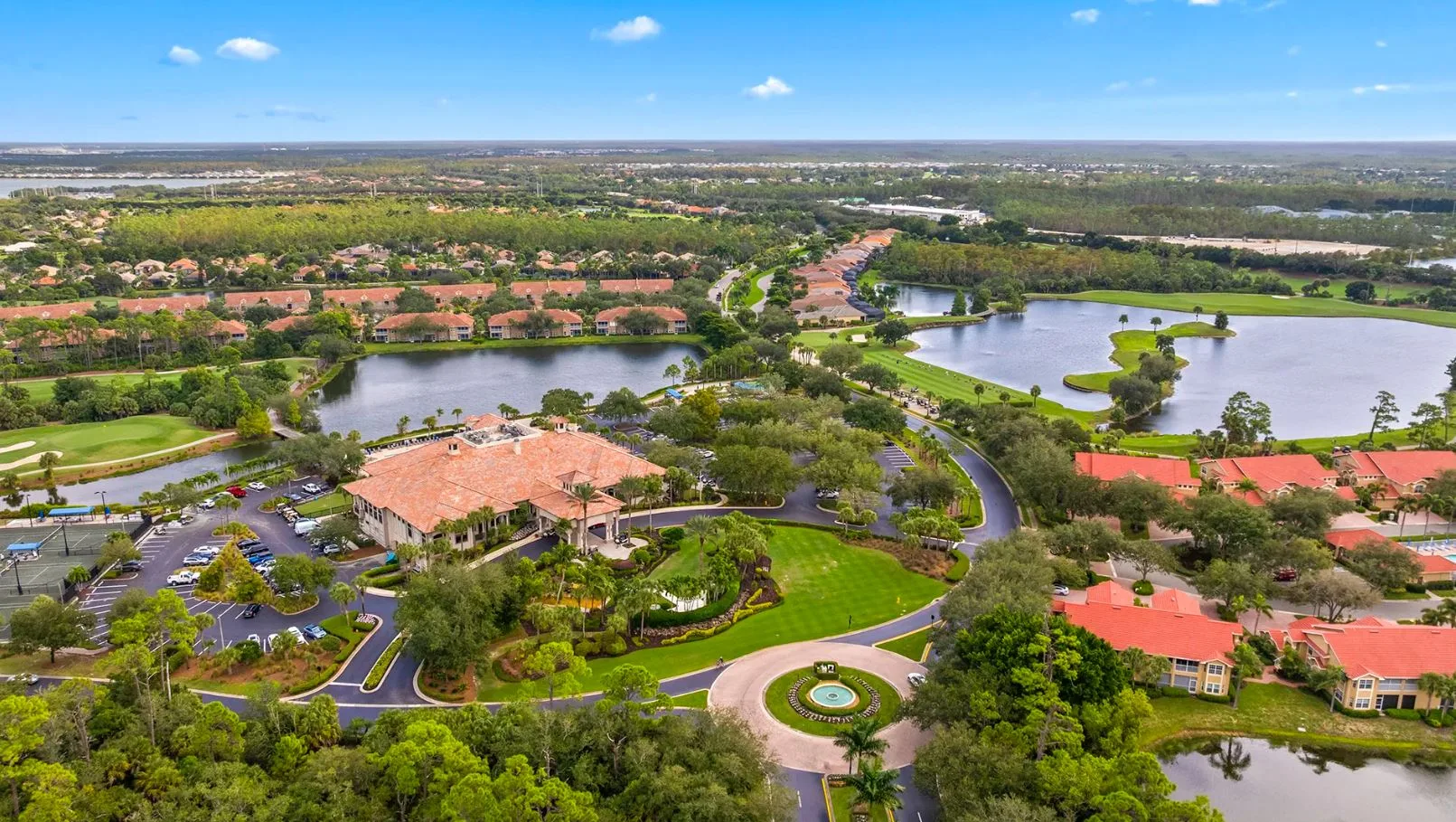
Southwest Florida's Fast-Growing Village Between Naples and Fort Myers
Estero
Estero is an incorporated village along US-41 and I-75 between Naples and Fort Myers, where master-planned communities, gated golf and active-adult neighborhoods, top-rated schools, and an outdoor shopping-and-dining scene anchor one of the fastest-growing family markets in Southwest Florida.
About Estero
Estero is an incorporated village in Lee County, roughly halfway between Naples and Fort Myers, about 16 miles south of Fort Myers and about 20 miles north of Naples. The name is Spanish for "estuary," a fitting title for a community built along the Estero River, which winds through town and empties into Estero Bay, the first aquatic nature preserve established in Florida. US-41 (the Tamiami Trail) is the commercial spine running through the village, with I-75 paralleling it just to the east, which is why Estero functions as the crossroads of the Naples and Fort Myers markets.
Estero's history runs deep and unusual. The first homesteader, Gustave Damkohler, farmed citrus along the Estero River beginning in 1882, and in 1894 Dr. Cyrus Teed led his Koreshan Unity, a utopian community, to settle on those banks and build a planned town. The Town of Estero was incorporated in 1904 and dissolved in 1907, and the community was reincorporated as the Village of Estero on December 31, 2014, following a voter-approved referendum. Since then it has become one of the fastest-growing municipalities in Florida, with its population climbing from 22,612 in the 2010 census to 36,939 in the 2020 census.
Today Estero is best understood as a collection of master-planned, largely gated communities organized around a village identity. Residents live in neighborhoods like The Brooks, West Bay Club, Breckenridge, Corkscrew Shores, WildBlue, and Grandezza, and gather at Coconut Point, Miromar Outlets, the Hertz Arena, and a growing Village Center. Koreshan State Park preserves the historic settlement on the river, and Gulf beaches are a short drive west across the barrier islands. For buyers who want newer construction, resort-style amenities, and strong schools in a family-friendly setting, Estero is one of the most compelling options in the region.
What Makes Estero Special
Estero is really two things at once: a collection of master-planned, gated communities, and a village with its own town center, shopping, parks, and history. Understanding both sides helps you choose the community, and the lifestyle, that fits the way you want to live.
Master-Planned Community Living
The defining feature of Estero is its master-planned, largely gated communities. The Brooks, one of the largest, spans roughly 2,492 acres and contains five gated neighborhoods, including Copperleaf, Shadow Wood, and Spring Run. West Bay Club, Breckenridge Golf & Tennis Club, Corkscrew Shores, WildBlue, Grandezza, Stoneybrook, and Wildcat Run each offer their own mix of golf, lakes, pools, tennis, and clubhouse amenities. Most residents live inside one of these planned communities, which is why Estero feels orderly, landscaped, and amenity-rich.
- Gated golf, lakefront, and family communities
- Clubhouses, pools, tennis, and community events
- Active-adult options like Cascades at Estero and The Place at Corkscrew
- Newer construction built to modern Southwest Florida codes
A Village with a Town Center
Estero never had an old downtown; instead, it is building one. The planned Village Center, east of US-41 near Estero Community Park, is designed to be the walkable, bikeable heart of the village, with civic buildings, the recreation center, and new mixed-use development taking shape. In the meantime, Coconut Point serves as the de facto town center: an outdoor lifestyle center with more than a hundred shops and restaurants set around lakes and a boardwalk, joined by Miromar Outlets and the Hertz Arena, home of the Florida Everblades hockey team and a steady calendar of concerts and events.
- Coconut Point outdoor shopping and dining district
- Miromar Outlets with more than 120 designer outlet stores
- Hertz Arena concerts and Florida Everblades hockey
- A planned Village Center anchoring the community
Estero Gallery
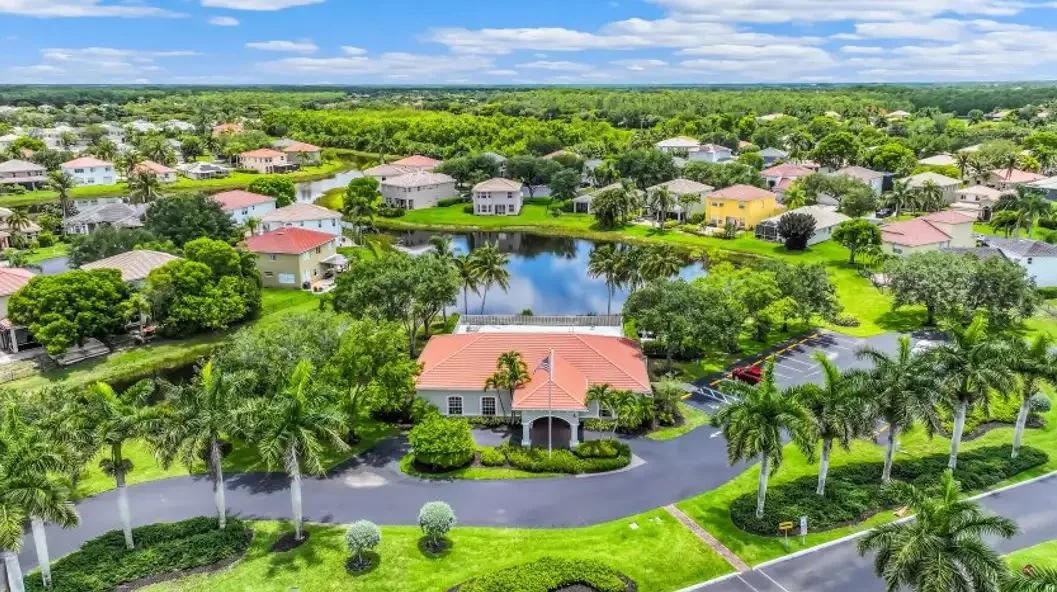
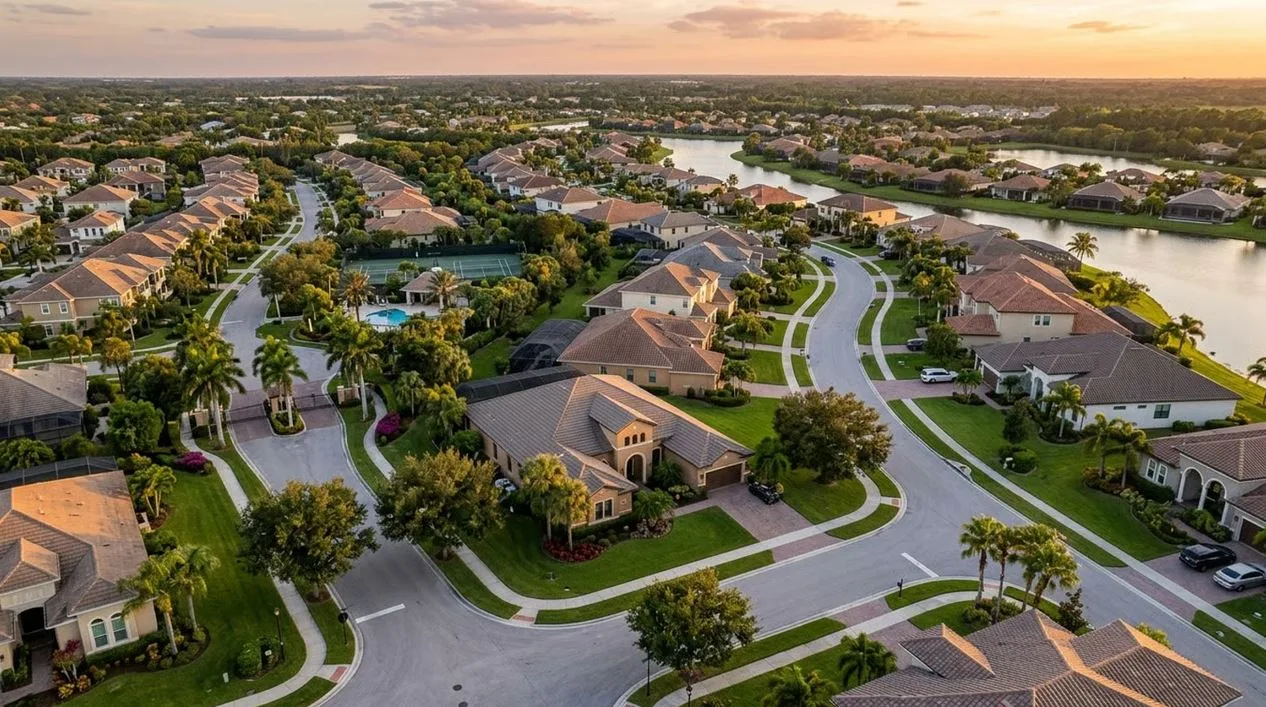
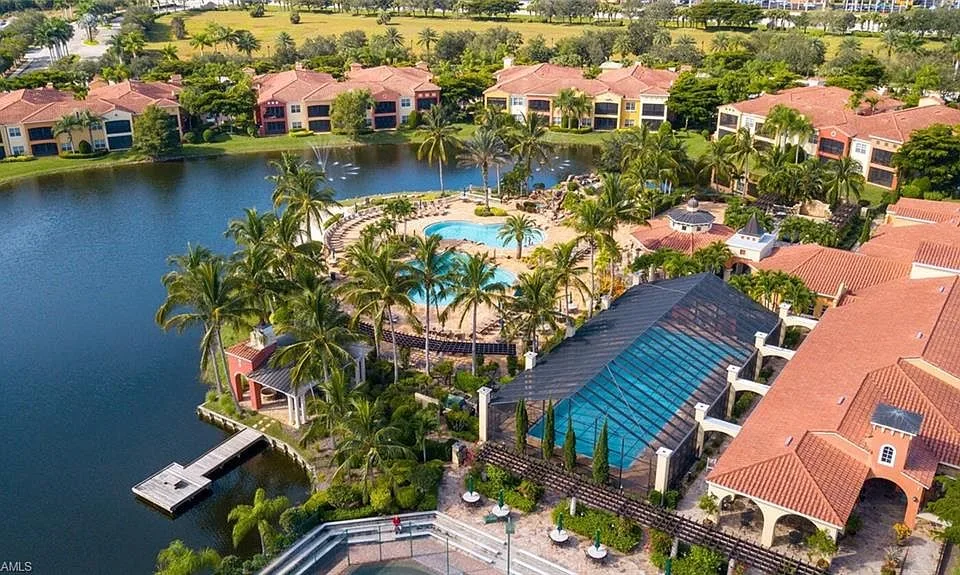
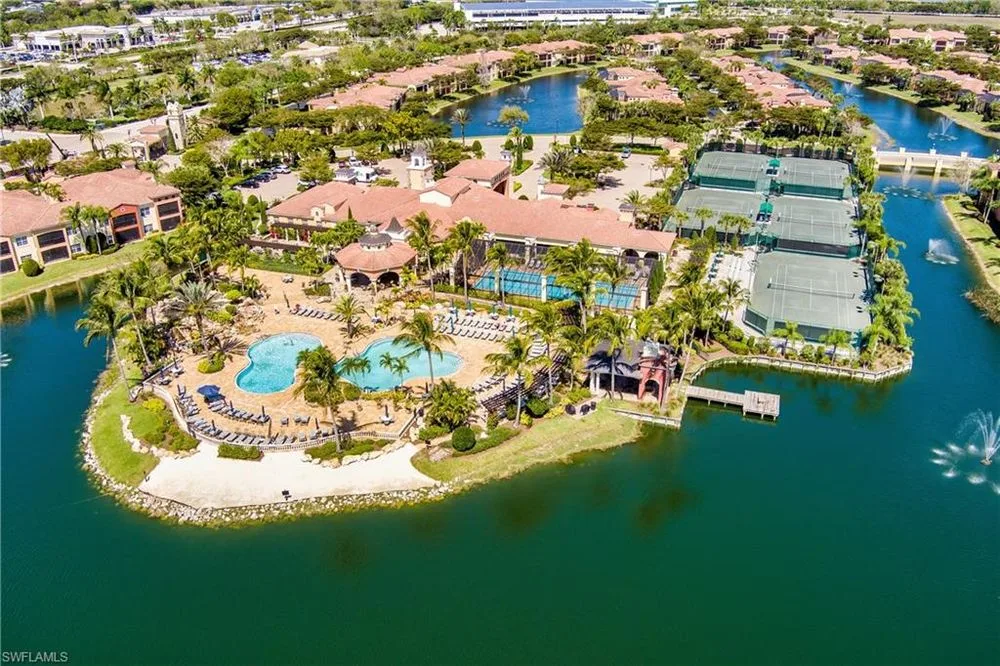
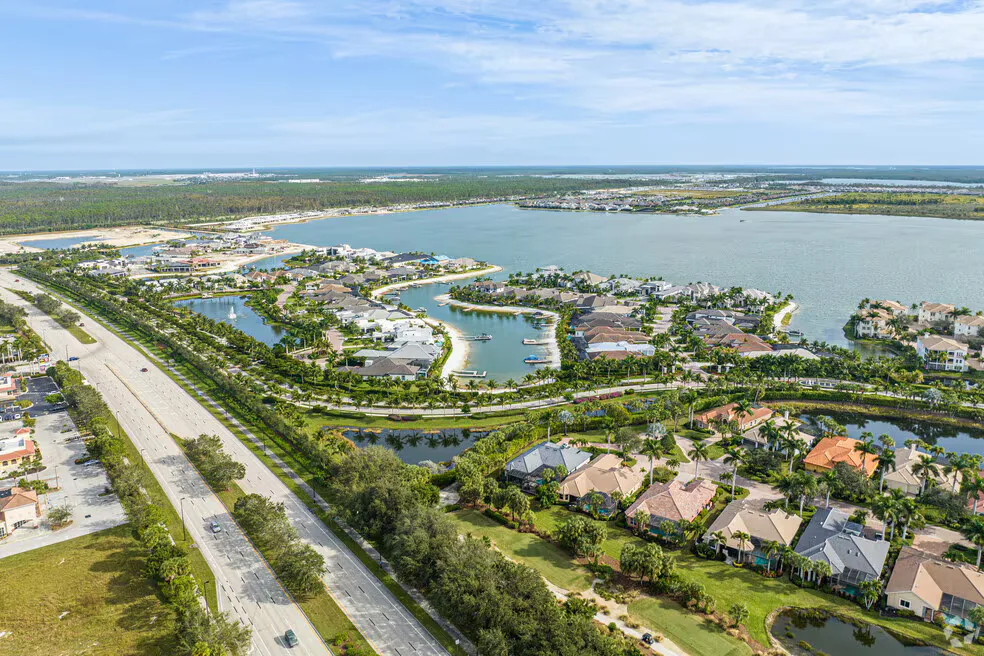
Aerial views of the master-planned communities, clubhouses, pools, and waterfront neighborhoods that define Estero living.
At a Glance
Housing Range
Townhomes, condos, villas, and single-family homes, plus gated golf estates
Location
Between Naples and Fort Myers along US-41 and I-75
Best For
Families, golf buyers, active adults, investors
Incorporated
Village of Estero, 2014
Lifestyle & Convenience
What makes Estero so practical is that its planned communities sit minutes from everything the village is known for. The shopping and dining along US-41 and Corkscrew Road are at the door, the Estero River and Koreshan State Park are close by, and Gulf beaches are a short drive west across the barrier islands. You get resort-style community living without giving up everyday convenience.
Shopping and Dining at the Center of It All
- Coconut Point, an outdoor lifestyle center with more than a hundred shops and restaurants
- Miromar Outlets with more than 120 designer and brand-name outlet stores
- Dining, groceries, and services along the US-41 and Corkscrew Road corridors
- US-41 and I-75 keep commutes to Naples and Fort Myers simple
Parks, River, and Gulf Beaches Nearby
- Koreshan State Park on the Estero River, with historic buildings, gardens, and canoeing
- Estero Community Park and Recreation Center with trails, courts, and playing fields
- Estero Bay, Florida's first aquatic nature preserve, at the river's mouth
- Lovers Key State Park, Fort Myers Beach, and Bonita Beach a short drive west
Location & Development History
Estero sits in Lee County on Florida's Gulf Coast, roughly 16 miles south of Fort Myers and about 20 miles north of Naples. US-41 (the Tamiami Trail) runs north-south through the village as its commercial spine, and I-75 parallels it to the east, which makes Estero the practical crossroads of the Naples and Fort Myers markets. The Estero River flows through the village into Estero Bay, and the Gulf beaches of Fort Myers Beach, Lovers Key, and Bonita Beach lie just across the barrier islands to the west.
The area's history is unlike anywhere else in Southwest Florida. Citrus farmer Gustave Damkohler homesteaded along the Estero River in 1882, and in 1894 Dr. Cyrus Teed led his Koreshan Unity, a utopian community, to settle there and build a planned town with gardens, workshops, and a printing plant. The Town of Estero was incorporated in 1904 and dissolved in 1907, and the last of the Koreshans donated the settlement to the state in 1961, preserving it as the park visitors see today. Estero was reincorporated as the Village of Estero on December 31, 2014, and has since grown into one of the fastest-growing municipalities in Florida.
2014
Reincorporated as the Village of Estero
36,939
2020 census population, up from 22,612 in 2010
~20 mi
North of Naples, about 16 miles south of Fort Myers
The Estero Housing Market
Estero's housing market is defined by its master-planned communities rather than by individual streets. Buyers can choose from townhomes and coach homes, condominiums, villas, and single-family homes, with most properties sitting inside a gated community with its own clubhouse, pool, and amenity package. The Brooks alone spans roughly 2,492 acres and contains five gated neighborhoods, including Copperleaf, Shadow Wood, and Spring Run, while communities like West Bay Club, Breckenridge Golf & Tennis Club, Corkscrew Shores, WildBlue, Grandezza, Stoneybrook, and Wildcat Run each bring their own golf, lakes, and recreation to the table.
Golf and active-adult living are major threads in the market. Gated golf communities such as Copperleaf at The Brooks and Grandezza pair homes with bundled or equity golf memberships, while Stoneybrook at Estero operates its course on a pay-as-you-play basis with no mandatory membership. Active-adult buyers have dedicated 55-plus communities including Cascades at Estero, The Place at Corkscrew, and Estero Bay Village on the river, plus age-targeted communities like WildBlue. Because most of Estero's housing was built in the last few decades, the inventory leans toward newer construction with modern building codes, impact protection, and energy efficiency, which is one of the strongest arguments for the area.
For buyers, the community is as important as the house. Nearly every property carries homeowners' association or community development district obligations, and golf communities add membership structures that vary widely from one neighborhood to the next. That is precisely where my background as a licensed Certified Building Contractor pays off: I help buyers evaluate construction quality, renovation and upgrade potential, association financials, and the real cost of community living before an offer is written, so the numbers you commit to are the numbers you live with.
The Estero Lifestyle
Life in Estero revolves around its communities and its village amenities. Mornings might start with a round at a community golf course or a paddle on the Estero River; afternoons often mean the clubhouse pool, tennis courts, or a bike ride through a landscaped neighborhood; evenings end with dinner at Coconut Point or a game at the Hertz Arena, where the Florida Everblades play hockey and concerts fill the calendar. For families, Estero Community Park and Recreation Center offers trails, courts, and playing fields, and the village's assigned Lee County schools, including Pinewoods Elementary, Three Oaks Middle, and Estero High School, anchor the family-friendly character.
The residents reflect that pace: a mix of year-round families, relocating professionals, active adults, and seasonal owners who value amenities, newer construction, and convenience over the formality of older Naples addresses. If you are relocating to Southwest Florida, Estero is an ideal landing point: close enough to Naples and Fort Myers for work and play, and complete enough that you rarely need to leave. It is planned development meets natural preservation, and it is growing fast for a reason.
Guide & Tips for Estero Buyers
From Jim Chambers, Licensed Certified Building Contractor • Nearly 40 Years in Naples Real Estate
Community and Association Review
Nearly every home in Estero sits inside a homeowners' or condominium association, and many communities also carry community development district obligations for infrastructure. The quality and financial health of these associations vary significantly from one neighborhood to the next, and the fees are a permanent part of the cost of ownership.
Before making an offer, I recommend reviewing the association's financial statements, reserve studies, and any recent or planned special assessments, and confirming what the monthly fee actually covers, from lawn care and insurance to clubhouse and pool access. A well-managed association adds real value and peace of mind; an underfunded one can turn into surprise assessments within the first year.
New Construction vs. Resale
Estero has a significant amount of newer construction, which means buyers often choose between a brand-new or recently completed home in a newer development and an established home in an older community. New construction offers modern building codes, energy efficiency, impact protection, and the newest floor plans, while an established home may offer larger lots, mature landscaping, and a more settled community feel.
The trade-offs are real on both sides. Newer homes can carry builder warranty considerations and community buildout timelines, while resale homes may need updated roofing, impact glass, or mechanicals as they age. As a licensed Certified Building Contractor, I help buyers weigh construction quality, upgrade needs, and true cost against their priorities, so you know exactly what you are buying before you commit.
Golf and Country Club Membership
If golf is part of the plan, the membership structure matters as much as the course. Some Estero communities, like Copperleaf at The Brooks and Grandezza, bundle golf equity or membership into the community, while others, like Stoneybrook at Estero, run their course on a pay-as-you-play basis with no mandatory membership. The difference can be tens of thousands of dollars in initiation fees and ongoing dues.
I help buyers read the fine print: what a membership actually includes, whether it transfers with the home, whether it can be sold separately, and what the waiting list or approval process looks like. Understanding the club economics before you buy keeps you from paying for amenities you will never use, or missing the community that fits your game.
Flood, Elevation, and Insurance
Parts of Estero sit in designated flood zones, particularly near the Estero River, Estero Bay, and the community lakes, and even inland neighborhoods can carry flood requirements. The elevation certificate is the most important document you will review: it tells you how the finished floor relates to the base flood elevation that drives both building requirements and insurance premiums.
I strongly recommend getting a flood insurance quote before making an offer, not after, and checking the home's hurricane protections: impact-rated windows and doors, roof age and tie-downs, and whether mechanical systems are elevated. Estero's newer construction is generally built to current Southwest Florida codes, but older homes and riverfront properties deserve a careful look, and that is exactly the kind of evaluation a builder brings to the table.
Active-Adult and 55+ Communities
Estero is one of Southwest Florida's strongest markets for active-adult living, with dedicated 55-plus communities like Cascades at Estero, The Place at Corkscrew, and Estero Bay Village on the river, plus age-targeted communities like WildBlue. These neighborhoods pair resort-style amenities with age-restricted residency, and the rules, fees, and lifestyle differ meaningfully from one to the next.
Before buying, it pays to confirm the age requirements, understand what the community fee covers, and check the financial health of the association, since active-adult communities often carry significant amenity obligations. I help buyers match the right community to the way they actually want to live, whether that is golf, boating, clubhouse social life, or a quieter, maintenance-free setting.
Schools and Family Fit
Families are a core part of Estero's character, and the village's assigned Lee County public schools, Pinewoods Elementary, Three Oaks Middle, and Estero High School, anchor that reputation. Lee County operates on a mix of attendance zones and a school choice plan, so it is worth confirming the current assignment for a specific address and exploring choice options where they apply.
Beyond the classroom, Estero is built for family life: Estero Community Park and Recreation Center offers trails, courts, and playing fields, the Hertz Arena hosts family shows and hockey, and Florida Gulf Coast University is close by. For relocating families, the combination of newer homes, planned communities, and strong schools makes Estero one of the most family-friendly choices in the Naples and Fort Myers corridor.
Investment Perspective
From an investor's point of view, Estero's growth is its strongest feature. The village is one of the fastest-growing municipalities in Florida, with its population climbing from 22,612 in 2010 to 36,939 in the 2020 census, and demand keeps coming from relocating families, active adults, and buyers priced out of Naples. Well-located, well-managed communities in a growing village tend to hold and build value over time.
The most common investment plays are newer single-family homes in master-planned communities and rental-friendly properties near the village's employment and retail centers, which is where my contractor background directly helps you underwrite the deal. I can estimate realistic improvement costs, flag association and flood considerations before you commit, and help you see whether the numbers hold up, so you are buying with your eyes open rather than on the strength of a marketing package.
What to Look for During a Showing
From Jim Chambers, Licensed Certified Building Contractor
When I walk a property with a buyer in Estero, here is what I am paying attention to beyond the obvious finishes and curb appeal:
Roof Age and Condition
Ask when the roof was installed and how many layers it has. In Florida, roof age drives insurance eligibility and premiums, and a roof near the end of its life is one of the largest expenses you can inherit.
Elevation Certificate
This document tells you the finished-floor elevation relative to the base flood elevation. It is the single most important factor in determining flood insurance costs on a coastal-area home.
Impact Protection and Windows
Are windows and doors impact-rated or protected by shutters? On an older home this is often the biggest update required, and it directly affects insurance and hurricane readiness.
Mechanical Systems
Check the age of the air conditioning systems, the electrical panel, and the water heater. Even in newer Estero communities, homes built a decade or more ago may run on systems approaching the end of their useful life, which is a negotiation point and a budget item.
Renovation History and Permits
Was the work done with permits? Unpermitted renovations can surface during a sale and create delays or liability. I help assess what was done properly and what needs attention.
HOA and CDD Obligations
Ask for the current association fee, what it covers, and whether the community carries a community development district assessment. These recurring costs are a permanent part of Estero ownership and vary widely by community.
Considering a Home in Estero?
With nearly 40 years in Naples-area real estate and a license as a Certified Building Contractor, I help buyers evaluate construction quality, community living, and investment potential from the foundation up, whether the plan is a new home in a master-planned community, a gated golf property, or an active-adult residence. Let's find the right community for you.