October 9, 2026 · New Construction
Key Takeaways
- New construction in Naples is built to the Florida Building Code, 8th Edition (2023), and coastal homes sit in a wind-borne debris region, so impact-rated windows and doors are the norm, not an upgrade.
- The permit trail is your best paper trail: search City of Naples permits for in-city homes or Collier County's online portal for unincorporated addresses, and confirm every permit is closed before you close.
- The builder behind the house matters as much as the house. Florida now requires builders of new single-family homes to provide a transferable one-year warranty, and the familiar 1-2-10 warranty is a private insured product, so get the terms in writing.
- Impact fees are a real line item: Collier County's current residential schedule totals about $22,000 for a new single-family detached home, before any city or utility fees for homes inside Naples city limits.
- Elevation and insurance follow the same rules as resale. Confirm the finished-floor elevation and get a flood insurance quote before you commit, because a coastal new build can still sit in a FEMA flood zone.
Is new construction in Naples a safer bet than buying an existing home? Not automatically. A brand-new build comes with current code compliance, new systems, and a builder's warranty, but it also comes with risks you cannot see once the drywall is up. As a licensed Certified Building Contractor with nearly 40 years in real estate, I look at new construction the same way I look at any property, from the foundation up. Here is the checklist I run through with a buyer before they commit to new construction in Naples.
Why Building Codes Matter More in Naples Than Almost Anywhere
Florida builds to the Florida Building Code, and the current edition is the 8th Edition (2023), which took effect on December 31, 2023, based on the 2021 International Building Code with Florida amendments. It remains in effect until the 9th Edition takes over on December 31, 2026. For a buyer, the edition matters less than the standard it enforces: Florida's coastal code is among the strictest wind standards in the country, written in the aftermath of Hurricane Andrew.
Naples sits squarely in what the code calls a wind-borne debris region. Under Section 1609.1.2 of the Florida Building Code, that means any area within a mile of the coastal mean high-water line where the ultimate design wind speed is 130 miles per hour or greater, and any area where the design wind speed is 140 miles per hour or greater. In those zones, every glazed opening in a new building must be impact-resistant, or protected by a covering that has been tested and approved to the code's standards, which include TAS 201, 202, and 203, ASTM E1996, and ASTM E1886.
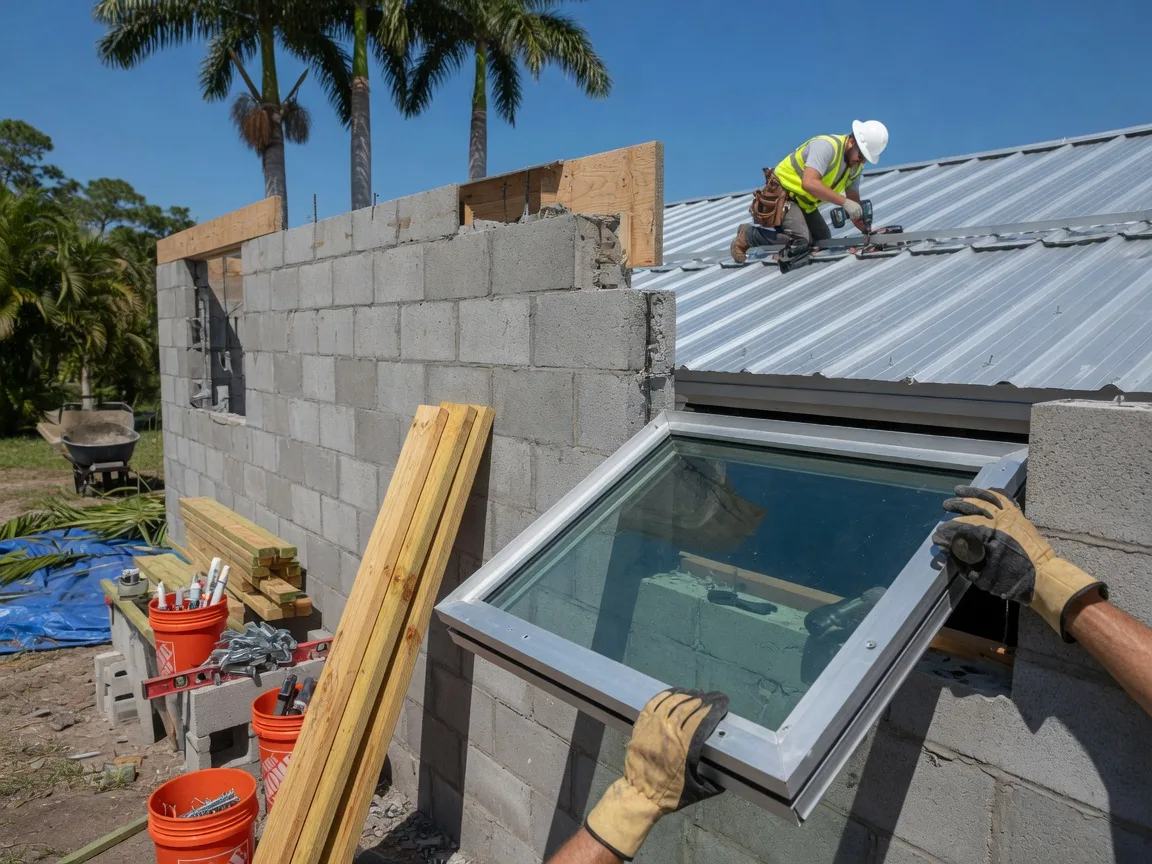
The practical translation is simple: on a properly built Naples new construction home, impact-rated windows and doors are standard equipment, not a builder upgrade you pay extra for. If a builder presents hurricane-impact glass as an optional add-on on a coastal home, that is a red flag worth questioning. For a deeper look at what separates quality construction from a pretty finish, my guide to understanding construction quality in Naples luxury homes covers the structural side in detail.
The Permit Trail: Your Best Paper Trail
A new build is a paper trail, and the permits are the receipts. Which agency issued them depends on exactly where the property sits, so verify the jurisdiction before you search.
Homes inside Naples city limits fall under the City of Naples Building Department, at 295 Riverside Circle, and the city's electronic permitting portal lets you search permits by property. Homes in unincorporated Collier County are handled through the county's online permit search, which also offers a historical permit review during a sale so you can check for open permits that could affect the closing.
What should you actually verify? First, that every required permit was pulled, from the building permit to electrical, plumbing, mechanical, and any pool or dock permits. Second, that each inspection passed and was signed off. Third, that no permits were left open. An open permit can delay financing, complicate the title, and hand you a problem the builder walked away from. This is one of the first things I check, because a permit record tells you as much about the builder as the finish work does. The full process of vetting a property before an offer is covered in my Naples buyer's guide.
The Builder: Reputation, Financials, and the Warranty
A new home is only as good as the builder standing behind it. On a resale, the house has a track record you can walk through; on new construction, you are betting on the people building it.
Track record. How many homes has the builder actually completed, and how long have they been building in Southwest Florida? Ask to walk a finished home and a home in progress, talk to a few past buyers, and look at whether the builder's completed communities held their value. A builder who has been through several Florida hurricane seasons and multiple market cycles makes different decisions under pressure than one who has not.
Financial health. Building a house is a capital-intensive business, and builders who are overextended can cut corners or disappear mid-project. Look at how many homes the builder has under contract versus how many they can staff, whether subcontractors are being paid on time, and whether the builder carries adequate insurance and licensing in their own name. I review these details the way I would underwrite my own project, because a house is only as safe as the company finishing it.
The warranty. Florida law changed here recently. Since July 1, 2025, Florida Statute 553.837 requires a builder of any newly constructed, never-occupied single-family home to provide a transferable one-year warranty covering construction defects in equipment, material, or workmanship that result in a material violation of the Florida Building Code. The familiar "1-2-10" warranty, one year on workmanship, two years on systems, and ten years on structural, is a private insured warranty product that many builders offer, but it is not required by state law. So the right question is not "do you have a warranty?" but "what exactly does it cover, in writing, and does it transfer to me if I resell?" Get the full warranty document before you sign the purchase agreement.
Elevation, Drainage, and Flood Insurance on a New Build
Here is the part that surprises people: new construction does not automatically escape flood risk. A brand-new coastal home can still sit in a FEMA flood zone, usually Zone AE or VE, and if your purchase is financed with a federally backed mortgage, flood insurance will be required.
The number that drives the premium is the finished-floor elevation relative to the base flood elevation. Good builders in Naples elevate new homes above that line, and the difference can be dramatic: a finished floor a foot or more above base flood elevation can cost far less to insure than a slab sitting closer to it. Ask for the elevation certificate, and get a real flood insurance quote before you negotiate, not after. I walk through the zones, the premiums, and the paperwork in my guide to Naples flood zones and flood insurance.
Drainage is the other thing a builder should have gotten right, and it is invisible after the landscaping goes in. The lot should be graded so stormwater flows away from the foundation, the swales should carry water to the street or storm system, and the home should meet the stormwater requirements in place when the permit was pulled. Standing water against a foundation is how slabs crack and crawl spaces become problems, so I check grading on a new build the same way I check it on a fifty-year-old house.
What a New Build Actually Costs in Naples
New construction activity in Collier County has cooled from its recent peak, but it remains a steady part of the market. According to U.S. Census Bureau building permit data compiled by the Federal Reserve Bank of St. Louis, builders in Collier County were authorized to build 2,736 new private housing units in 2025, down from 3,524 in 2024. For buyers, a slower build market can mean more negotiating room, but it also means paying attention to which builders are thriving and which are struggling.
Beyond the base price, budget for impact fees, the one-time charges counties levy to fund the roads, schools, parks, and public services a new home draws on. Under Collier County's current residential impact fee schedule, a new single-family detached home carries roughly $22,000 in county impact fees, and homes inside Naples city limits add municipal and utility fees on top of that. The exact figure depends on the home's size, its fire district, and the rates in effect when the permit is pulled, so it belongs in your budget model from day one, not as a surprise at closing.
Where New Construction Is Happening Around Naples
New construction is not evenly spread across Naples. The beachfront communities like Olde Naples, Park Shore, and Port Royal are largely built out, so "new" there usually means teardown-and-rebuild, which comes with its own set of rules and costs. The most active new construction sits in the master-planned and growth corridors.
Inland, The Vineyards offers gated golf and country-club living in North Naples with homes spanning different eras, so buyers can compare newer builds against established construction in the same community. The fastest growth is to the northeast, where Bonita Springs and Estero have seen a steady pipeline of new single-family and community developments along the U.S. 41 and I-75 corridors. My Bonita Springs and Estero guides cover what those new communities offer, from golf-course settings to family-friendly master plans.
When Buying New Beats Buying Existing
New construction wins when you want current code compliance, energy-efficient systems, no deferred maintenance, and finishes chosen by you. A new home also tends to carry lower wind insurance than an older home, because the impact glass and updated roof attachments reflect the risk more accurately. And with a reputable builder, the warranty covers the first years of ownership.
Existing construction wins when location and land matter more than the structure itself. An established lot with mature landscaping, a rare canal position, or a waterfront view you cannot build again may justify renovating an older home instead. That is a decision I help clients work through every week, and my framework for renovation versus new construction walks through the math on both sides. If you are on the selling side of that decision, my Naples seller's guide covers pricing and timing a property the market is watching.
The Bottom Line
New construction in Naples can be an excellent decision, but it is still a construction project. It has a code, a permit trail, a builder behind it, and real costs beyond the base price, from impact fees to flood insurance. The buyers who do best are the ones who verify the builder, confirm the permits are closed, review the elevation certificate, and read the warranty before they sign.
That is exactly the kind of due diligence I do for my clients. As a licensed Certified Building Contractor, I can review the plans, the permits, the builder's track record, and the elevation before you commit a dollar. Schedule a conversation and we will evaluate a new construction opportunity the way a builder would, because the best time to catch a problem is before it becomes yours.
New Construction in Naples: FAQ
Is impact glass required on new construction in Naples?
Yes. Naples sits in a wind-borne debris region under the Florida Building Code, Section 1609.1.2, which includes any area within a mile of the coastal mean high-water line where the ultimate design wind speed is 130 mph or greater, and any area where it is 140 mph or greater. In those zones, every glazed opening in a new building must be impact-resistant or protected with a tested impact-resistant covering, so hurricane-impact windows and doors should be standard on any properly built Naples new construction home.
How do I check a builder's permits in Naples?
It depends on the jurisdiction. Homes inside Naples city limits are covered by the City of Naples Building Department, which offers an electronic permitting portal where you can search permits by property. Homes in unincorporated Collier County are covered by the county's online permit search, which also offers a historical permit review during a sale. Verify that all permits were pulled, that inspections were signed off, and that no permits were left open before you close.
What warranty do Florida builders have to provide on a new home?
Since July 1, 2025, Florida Statute 553.837 requires a builder of a newly constructed, never-occupied single-family home to provide a transferable one-year warranty covering construction defects in equipment, material, or workmanship that result in a material violation of the Florida Building Code. The familiar 1-2-10 warranty, one year on workmanship, two years on systems, and ten years on structural, is a private insured product that many builders offer but is not required by state law, so ask for the exact warranty document in writing.
How much are impact fees for new construction in Collier County?
Under Collier County's current residential impact fee schedule, a new single-family detached home carries roughly $22,000 in county impact fees, before any municipal or utility fees for homes inside Naples city limits. The exact figure depends on home size, location and fire district, and the rates in effect when the permit is pulled, so it is worth running the county's impact fee calculation before you budget.
Do I need flood insurance on a new construction home in Naples?
If the property sits in a FEMA flood zone, typically Zone AE or VE on the coast, and you finance with a federally backed mortgage, flood insurance is mandatory. Even a brand-new home can be in a flood zone, and the premium is driven by the finished-floor elevation relative to the base flood elevation. Ask for the elevation certificate and get a real flood insurance quote before you write an offer.

Written by Jim Chambers
Jim Chambers is a licensed Certified Building Contractor and Florida REALTOR® with nearly 40 years in residential, commercial, and investment real estate. He evaluates Naples luxury, waterfront, and investment property from the foundation up, including plans, permits, and new construction. FL License SL3299191. Read his full story.
Thinking About Buying or Selling in the Naples Florida?
Whether you're buying your first waterfront home, selling a luxury property, or simply want to know what your home is worth, I'm here to help. As a local Naples REALTOR®, I provide expert guidance, market insights, and personalized advice throughout the Naples Florida.